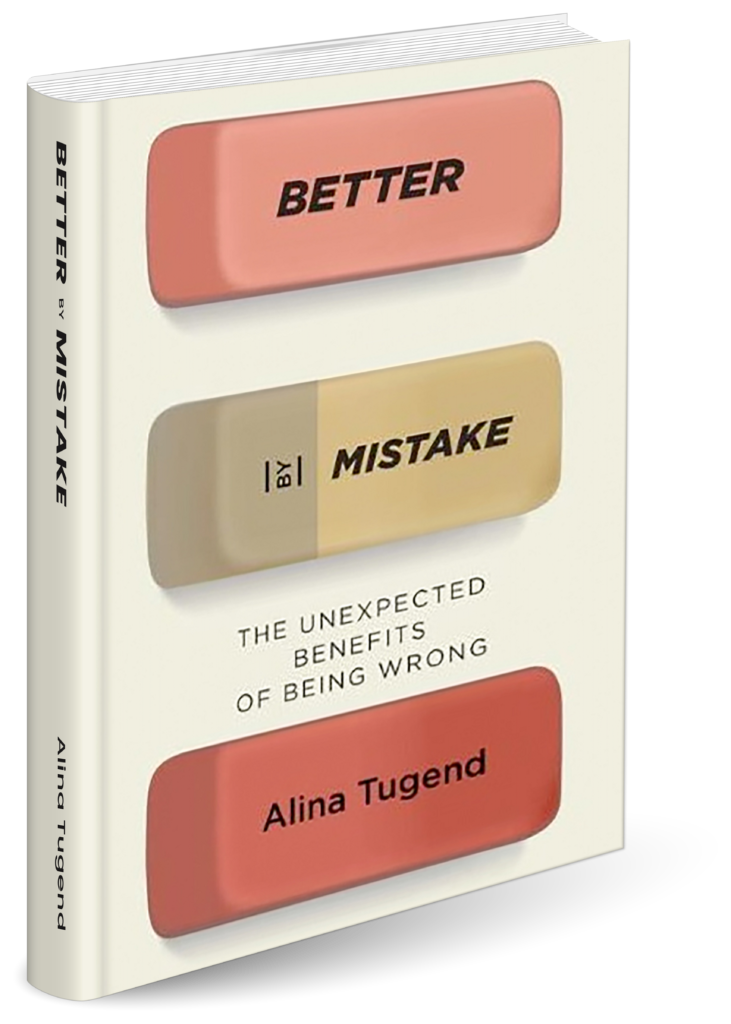
Better by Mistake
In Better by Mistake, I examine the delicate tension between what we’re told – that we must make mistakes in order to learn – and the reality that most of us dread and avoid mistakes. Using in-depth research and behavioral studies, my book includes what the medical and aviation fields have taught us about the best ways to respond to errors, how and why men and women react differently to mistakes and how other cultures approach the concept of mistakes.
Better by Mistake was:
- Named by The Huffington Post as one of the “Books We Thought You Should Know About”
- Listed on Entrepreneur’s “Seven Intriguing Books to Inspire you This Spring”
- Called “one of the five favorite books on creativity" by Westchester Magazine
- A finalist for Books for a Better Life award
- Awarded Honorable Mention by the American Society of Journalists and Authors
Buy Better by Mistake
Acclaim for Better by Mistake:
Myths about Making Mistakes
Here are some common myths – and the real facts – about mistakes.
Fact: Many perfectionists fear challenging tasks, take fewer risks and are less creative than nonperfectionists. One research study found that perfectionists performed more poorly than their counterparts in a writing task. It may be that perfectionists so dread receiving feedback that they don’t develop the same writing skills as non perfectionists.
Fact: Research has shown that praising children for being smart – rather than for making a good effort – leads them to fear taking on more difficult tasks because they might look “dumb.” Children who feel effort is more important than appearing smart are often more willing to tackle greater challenges.
Fact: Women and men do tend to respond to mistakes in different ways, but each sex can learn something from the other’s approach. Men tend to place the blame on others and could benefit from a greater willingness to shoulder responsibility for their errors. Women, on the other hand, tend to beat themselves up, and need to learn to depersonalize mistake-making. Read more on my blog for The Huffington Post
Fact: While it’s not a great idea to wait too long to apologize, research has found that if you say “I’m sorry” before the person you hurt has time to be heard and understood, the apology can feel more like pressure to move on than a sincere statement of regret.
Fact: The vast majority of fatal medical errors arise from systemic problems rather than a few bad apples. For example, bacteria that collect in lines inserted into patients to deliver medication and nutrients and to measure activity in the body cause an estimated 80,000 bloodstream infections, resulting in about 28,000 deaths annually.